Showing posts with label PTSD. Show all posts

Sunday, April 18, 2010

April 18, 1945

18- _____ bombarded all night _ we left south west side & went to N_____ bay and also bombarded there _ we got there early & bombarded through out the day.
____ While on watch from 2000 to 2400 turrit II had an accident.
____ We were firing rapid fire & on the 4th round, the powder can of the center gun blow up & killed 4 men & wounded 13. Those that were killed were

1 Lt Steveans _____ 3 Craddock BM 2/3
2 Cecil S 2/c ______ 4 OcConnal GM 2/c

We bombarded the rest of the night.
48 days out of states
________________________

N = Nahagasuku Bay on the east side of Okinawa.
turrit = turret

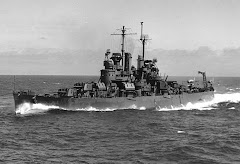
The accident happened between 10 pm and midnight. Mobile's official war record states, "In the Okinawa Operation in April, 1945, a six-inch powder case exploded in Turret II during the
ramming of the center gun, killing one officer and five men, and wounding sixteen men, thirteen of them seriously."

The Story of A Ship—USS Mobile And The Men Who Fought Her lists the victims as William Wyman Stephens, Ensign, USNR; Donald Keith Cecil, S1c, V-6, USNR; Leo Lawrence O'Connell, GM2c(T), V-6 USNR; and Howard Edwin Craddock, BM2c, USN.

USNR = US Naval Reserve
S1c = Seaman, 1st Class
GM2c = Gunnery Mate, 2nd Class
BM is, I think, Bosun's Mate

The photo shows the 2 crews responsible for Gun Turret II (Joe in center on steps). Each crew would have had about 20 men. Joe doesn't mention being wounded. He was likely one of only 4 men on the crew to come through unscathed. More of the seriously wounded died later. This survivor's guilt, along with the PTSD symptoms Joe was already experiencing, no doubt escalated his condition to the chronic case he brought home.

Friday, January 15, 2010

WHAT IS POSTTRAUMATIC STRESS DISORDER (PTSD)?

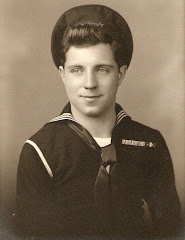
In 1945, Joe Chicco came home from the South Pacific with a chronic case of PTSD, though he wasn't officially diagnosed until after 1980, when the disorder was finally given a name. The next week's blogs will give information about PTSD.

All of us can remember an incident in our lives--a car accident perhaps--that set our hearts pounding and shortened our breath. At such times, our "fight or flight" mechanisms kick into gear, raising adrenaline levels, to help us deal with the sudden stress. Some people experience this fright reaction for a more extended period, for instance, the minutes it takes to escape a house fire, or hours of sitting through a bad hurricane, or perhaps over and over, during weeks spent as a 24/7 caregiver to a loved one.

This stress reaction is normal, and we need it to handle emergencies. But even after the incident is over, most of us don't sleep easy for a night or more. Many of us still feel remnants of that sudden adrenaline surge in our limbs and our guts, making us a little shaky and queasy, for days or weeks after. Some folks eat more as result ("I had a bad day and I deserve chocolate"), or drink an extra beer, or smoke a few extra cigarettes each day. After a while, we return to normal.

But when people go through a particularly horrendous trauma, especially if the trauma of its aftermath lasts more than a day--or when people are asked to work in situations such as combat where the fight-or-flight response is sustained at a high level over months or even years, the body's chemistry can actually change. This is Posttraumatic Stress Disorder, now called PTSD.


___________________________
Information taken from the National Center for PTSD website. Highly recommended.
http://ncptsd.va.gov/ncmain/information/

More information is also available from the Military Veterans PTSD Reference Manual,
http://www.ptsdmanual.com/